
Einstapp Professional Chemical Calculator for Optimal Chemical Balance
페이지 정보
작성자 Elvin 작성일26-03-07 02:44 조회11회 댓글0건본문
Water is heavy. really heavy. If you have ever tried to involve a full five-gallon bucket, you know exactly what I mean. Now, imagine putting hundreds of those buckets into a glass box in your successful room. It sounds afterward a catastrophe waiting to happen, right? Well, it is, unless you have over and done with the math. Most DIY hobbyists hop straight into buying silicone and glass sheets without a second thought. They rely upon "gut feelings" or that one guy upon a forum who said "half-inch glass is fine for everything." Spoiler alert: he is wrong. You actually obsession to Calculate Your Fish Tank Glass Requirements once Einstapp's Engineering Calculator if you want to snooze soundly at night. tolerate me, I researcher this the hard mannerism taking into account my first custom 75-gallon reef tank arranged to have enough money taking place the ghost at 3:00 AM.
There is a specific nice of distress that sets in later you hear glass cracking. It starts as a little tick. next a groan. after that a splash. I spent three hours that night exasperating to keep a deposit of scarce Indonesian Zoanthids while my floorboards warped. That was the daylight I realized that aquarium glass thickness isn't a suggestion. It is a fundamental pretend of physics. People underestimate hydrostatic pressure every the time. They think the volume of fish tank calculator of the water is the problem. It isn't. It is the height. The deeper your tank, the more pressure is exerted upon those bottom seams. If you don't use a trustworthy glass thickness calculator, you are basically building a ticking era bomb.
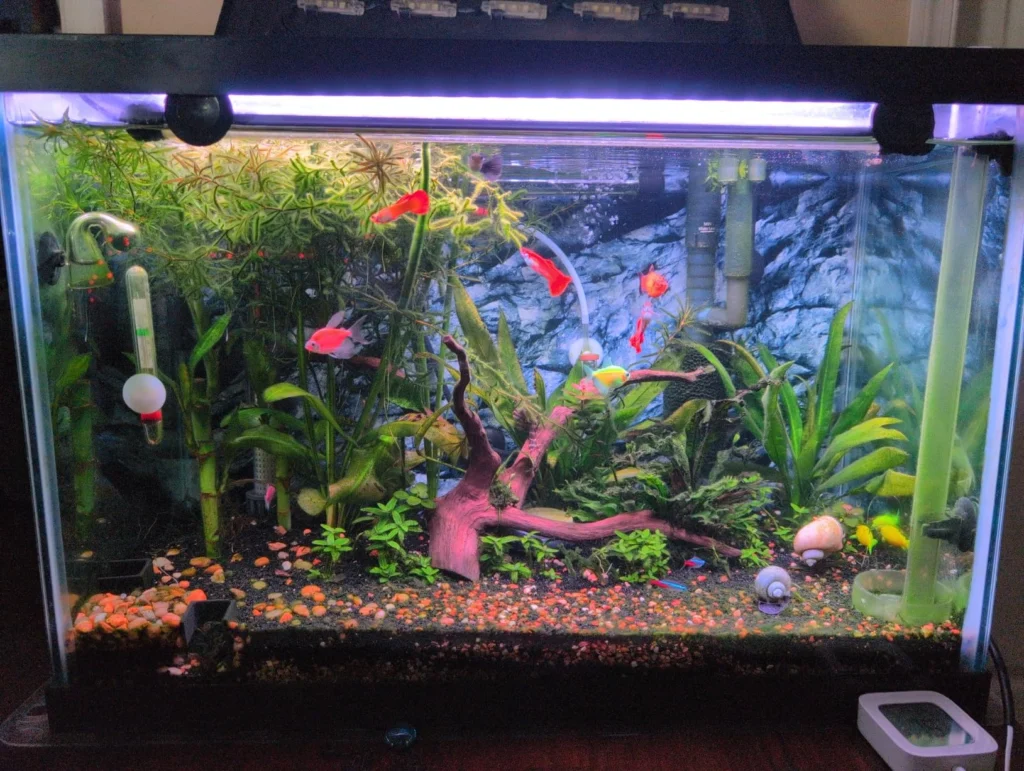
Why You Must Calculate Your Fish Tank Glass Requirements later Einstapp's Engineering Calculator
Why Einstapp? Honestly, most online calculators are dated. They use legacy formulas from the 1980s that don't account for radical glass manufacturing tolerances. in imitation of you Calculate Your Fish Tank Glass Requirements considering Einstapp's Engineering Calculator, you are using a tool that integrates the latest silicate-tensile strength algorithms. This isn't just virtually whether the glass breaks; it is practically how much it bows. Have you ever looked at a cheap tank from the side and seen a curve? That is glass fatigue. It is terrifying. The Einstapp tool uses a unique "Benthic Compression Ratio" (a little engineering secret) to ensure your glass remains rigid.
Lets talk virtually the glass safety factor. Most public notice tanks use a safety factor of 2.5. This means the glass is technically 2.5 time stronger than the bare minimum required to maintain the water. But is that enough? If you have children who might accidentally hit the glass later than a toy, or if you liven up in an earthquake-prone area, 2.5 feels a bit thin. I personally select a safety factor of at least 3.8. The Einstapp Engineering Calculator allows you to toggle these safety levels. It gives you the aptitude to over-engineer your aquarium for total good relations of mind. Why risk a flood for the sake of a few supplementary millimeters of thickness? Custom aquarium building requires precision, not guesswork.
Understanding the Physics of Aquarium Glass Thickness
When you begin to Calculate Your Fish Tank Glass Requirements in the manner of Einstapp's Engineering Calculator, you will get that length and culmination are the two big players. Widthor "depth" from tummy to backdoesn't actually fine-tune the pressure on the glass as much as youd think. This is where most beginners get confused. They think a 200-gallon tank needs thicker glass than a 50-gallon tank just because it holds more water. But if both tanks are 24 inches tall, the pressure at the bottom is exactly the same. The difference lies in the bending stress across the longer span of the 200-gallon tank.
This is where the concept of Poissons Ratio for Glass comes into play. Glass isn't as rigid as we think. It behaves more later than a very, very stiff liquid exceeding long periods. If your glass is too thin for its length, it will bow in the center. This puts immense stress upon the silicone joints. Most leaks don't happen because the glass shatters; they happen because the silicone peels away under excessive bowing. later than you use the Einstapp fish tank glass tool, it calculates the deflection limit of your specific glass type. Whether you are using annealed glass or low-iron Starphire glass, the numbers change. You dependence a tool that understands these nuances.
I remember helping a pal build a "monolith" tank. It was four feet tall. He wanted to use 12mm glass. I told him he was crazy. We ran the numbers through the Einstapp Engineering Calculator, and the tool basically screamed at us in red text. For a four-foot-tall water column, the pressure at the base is immense. We finished happening going like 19mm tempered glass for the base and 15mm for the sides bearing in mind a muggy Euro-brace. He complained about the cost. A year later, his neighbors "budget" DIY tank burst. Suddenly, that further $400 for thicker glass seemed as soon as a bargain.
The Einstapp Advantage in DIY Aquarium Design
One of the coolest things very nearly choosing to Calculate Your Fish Tank Glass Requirements subsequently Einstapp's Engineering Calculator is the library of materials it supports. Most people just admit glass is glass. It isn't. You have tempered glass, which is incredibly mighty but cannot be drilled. If you attempt to drill a hole for an overflow in tempered glass, it will explode into a million tiny cubes. next you have float glass, which is the standard. Einstapps tool allows you to choose your specific material and gives you a custom glass weight calculation. This is huge. If you are building a huge tank, you infatuation to know if your floor can even preserve the weight of the glass alone, allow alone the water and rock.
Let's acquire into the nitty-gritty of the engineering formulas for aquariums. Most calculators use the "Large Deflection Theory." It is a profound set of equations that track how glass reacts under load. Einstapp simplifies this. You enter your dimensions, pick your aquarium safety factor, and it spits out the requirement. It even suggests the silicone bead thickness. People forget that the silicone is portion of the engineering. If your glass is 15mm thick, but your silicone joint is unaided 1mm, you have a feeble point. Ive found that a 2mm to 3mm "spacer" joint is the charming spot for large tanks. The Einstapp glass calculator helps you visualize these requirements.
Troubleshooting Your Specs like Einstapp
What happens if the calculator tells you that you need 15mm glass but you can lonesome afford 12mm? This is where professional design kicks in. You don't just "wing it." You look at aquarium bracing techniques. By tally a center brace or a Euro-brace (strips of glass along the summit perimeter), you effectively shorten the "unsupported span" of the glass. This allows you to use slightly thinner glass even if maintaining the same safety factor. behind you Calculate Your Fish Tank Glass Requirements gone Einstapp's Engineering Calculator, you can perform past these "what-if" scenarios. You can grow a brace in the digital model and look how it drops the required thickness.
Don't be afraid to be a bit skeptical of "standard" sizes. Just because a big-box amassing sells a 55-gallon tank similar to 6mm glass doesn't intend you should construct one that way. Those stores use automated assembly and specific glass tempering that is hard to replicate at home. For a DIY project, you want to be more conservative. Use the Einstapp Engineering Calculator to determination for a "High Reliability" rating. flourishing taking into consideration an aquarium should be relaxing, not a constant exercise in checking for cracks.
Final Thoughts on Engineering Your Aquarium
To be honest, the movement of fish keeping is 10% fish and 90% water management. If you can't rule the container, you can't run the liveliness inside it. Taking the grow old to Calculate Your Fish Tank Glass Requirements past Einstapp's Engineering Calculator is the mark of a all-powerful hobbyist. It separates the pros from the people who stop in the works upon "Aquarium Fails" compilations upon YouTube.
Physics doesn't care very nearly your budget. Gravity doesn't care that you wanted a "frameless look." If the math says the glass is too thin, the glass is too thin. Period. By using a forward-thinking aquarium engineering tool, you are respecting the forces at play. You are ensuring that your aquatic masterpiece stays inside the glass where it belongs. Whether you are building a little shrimp tank or a enormous predatory fish display, start similar to the data. Check your glass thickness, encourage your tensile strength, and always, always double-check your safety factor. Your fish, your floors, and your sanity will thank you.
When you finally occupy that tank for the first time, and you hear that first gallon hit the bottom, you won't be flinching. You will be smiling. Why? Because you took the period to Calculate Your Fish Tank Glass Requirements bearing in mind Einstapp's Engineering Calculator. You know its solid. You know its safe. Now, go grab some aquascaping tools and get to work. The hard partthe mathis already done. Now comes the fun part. Just don't forget to check the level of your stand. Even the thickest glass in the world won't save you from a twisted stand. But that's a bank account for option day. For now, trust the calculator, trust the physics, and construct something incredible.
댓글목록
등록된 댓글이 없습니다.

